Gordon Prentice at Large - Politics in Newmarket



- Details
- Written by: Gordon Prentice
If Tom Vegh is re-elected on 26 October 2026 for a third term on the public payroll as Newmarket’s Deputy Mayor and Regional Councillor, he’ll be laughing all the way to the bank. 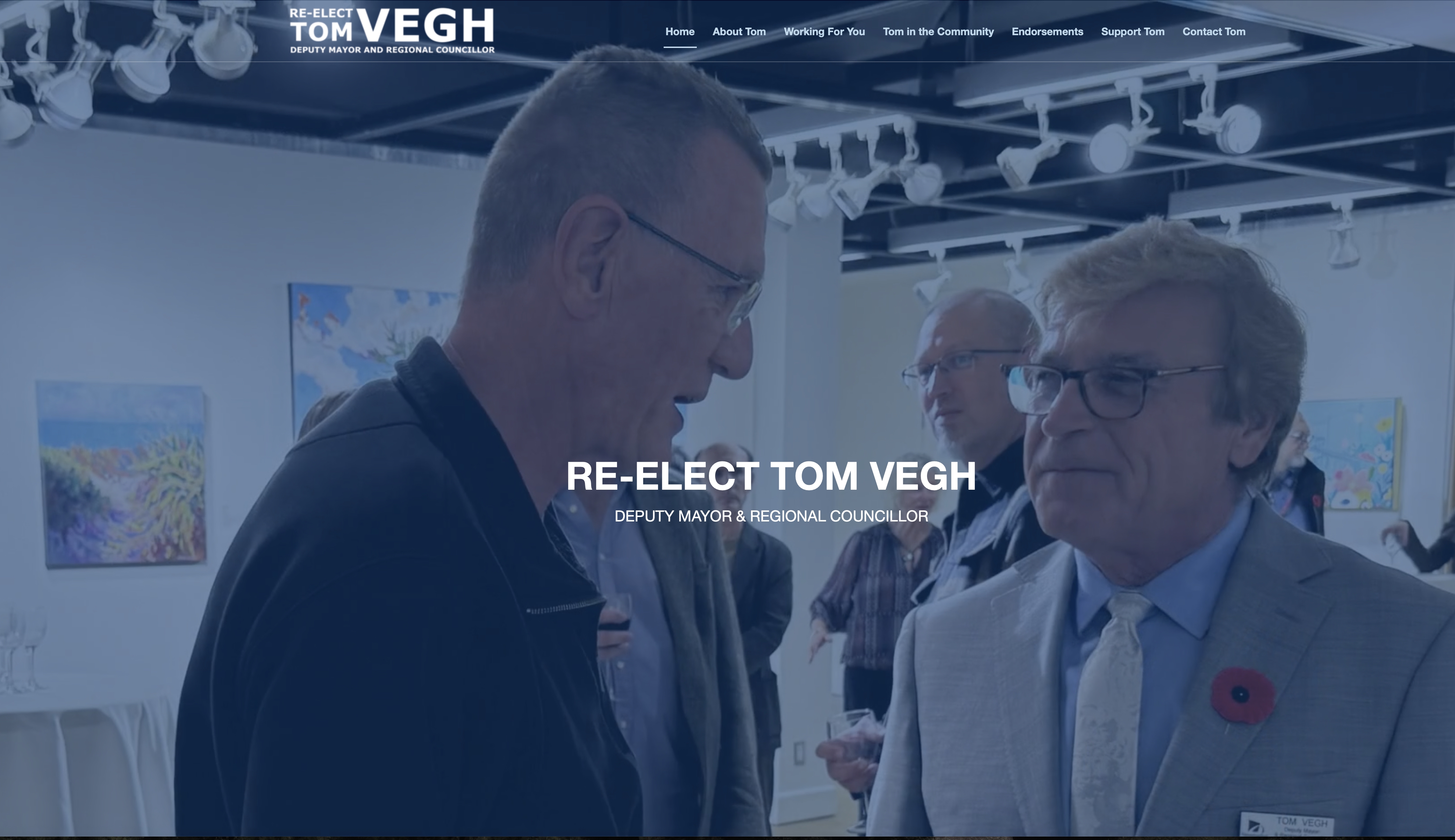
Most people don’t spend their time thinking about municipal elections which allows shallow and mediocre full-time politicians like Tom Vegh to prosper and thrive.
He avoids debate. He knows his embellished record would be taken apart if he were on a debate stage with a well-briefed challenger like Dr Mohsen Alavi who, memorably, told Newmarket Today:
Newmarket should have “an expert voice at the table, not a quiet one.”
Vegh relies on huge name recognition. Vegh has been on the public payroll for over twenty years in one form or another. No-one is quite sure what he has done but he’s been around for so long they believe he must have done something.
Carpet Bombing
His strategy is to carpet-bomb the Town with hundreds of lawn signs using money borrowed from the banks.
He benefits from the incumbency effect. Years of attending events – allegedly 900+ in the 2022-2026 council term – with support paid for by the Town with a brief to project his image and avoid controversy.
And, on top of all that, elected officials who’ve known the real Tom Vegh for years make no comment about his absences, his disengagement and silence at Council and Committee meetings or the absurdity of him touting himself as “a leader you can count on”. 
And why did Vegh choose not to speak in a lengthy York Regional Council debate on 29 September 2022 on the funding of the Inn From the Cold (where he was Executive Director) on a motion brought forward by the Town’s Mayor, John Taylor? This is truly baffling. I asked the Mayor if he quizzed Vegh about his silence but that’s information Taylor is not willing to share.
Eight Years without authoring a single motion for debate
It is worth repeating that, in eight years on York Regional Council, Vegh has not authored and brought forward a single motion for debate. 
In the entire 2022-2026 term of York Regional Council when there were 85 council and committee of the whole meetings the press reported him speaking in eight.
On 28 September 2023 he was one of two regional councillors voting against spending $4.3M on asylum seeker services. On 7 December 2023 he spoke about car thefts in his neighbourhood and he returned to this subject on 30 May 2024. On 7 November 2024 he said he wanted more visible police patrols and on 6 November 2025 he said he supported civilian staff handling various tasks that would otherwise take an officer off front line duty. Half his reported comments over the four-year period were about the police.
Compassionate and caring but not at any cost
On 10 April 2025 on a debate on provincial funding shortfalls for health and human services, Vegh talked about the burden on regional taxpayers saying:
“The residents of York Region (are) very compassionate and caring but not at any cost.”
On 27 November 2025 he supported a $25M contribution by York Region to York university’s medical school. On 9 April 2026 he talked about the importance of clean water. And, in the same meeting, he wondered aloud if development charge reductions would lower house prices or increase developers’ profits.
And that’s it.
Checking the Transcripts
Of course, Vegh could have spoken on a range of hot button issues that were not picked up by the press but AI now allows us to generate transcripts from videos of meetings and check on Vegh’s contributions. (That assumes the videos are posted on-line and have not been taken down.)
I pick one at random – 26 October 2023 – and ask ChatGPT to import the 1hr 13m video code and transcribe it, highlighting Vegh’s contributions. As is so often the case, Vegh moves the adoption of some minutes but AI tells me it finds:
“No substantive debate contribution by Vegh identified in this review. Neither transcription pass identified a substantive exchange introduced or otherwise attributed to him.”
Missed meetings
Vegh wants us to believe he is a diligent Deputy Mayor and Regional Councillor only missing two meetings of the Newmarket and York Regional Councils in this 2022-2024 term. He missed 18. He missed 21% of the meetings of the Lake Simcoe Conservation Authority. 23% of the Lake Simcoe Foundation Board from 2022 to 2024 – when he came off. He missed 18.5% of the meetings of the York Region Rapid Transit Board. He sits on all these bodies because he is a Regional Councillor.
What matters is not his attendance record per se but the contribution he makes when he’s there. Did he shape and lead the discussion or did he just gaze out the window?
- Details
- Written by: Gordon Prentice
I see Doug Ford has appointed Newmarket-Aurora MPP, Dawn Gallagher Murphy, as Parliamentary Assistant to the Associate Minister of Artificial Intelligence Adoption, Vijay Thanigasalam, the Progressive Conservative MPP for Scarborough—Rouge Park.
Gallagher Murphy’s base salary is $163,275 (less than Tom “Instagram” Vegh’s) but carries a "Parliamentary Assistant" supplement of $23,348 bringing the total to $186,623.
ChatGPT tells me Gallagher Murphy introduced a private member’s motion in April 2024 calling for Ontario to assess the risks, successful adoption and ethical use of AI in government, alongside measures against emerging cybersecurity threats. The Legislature debated and passed it on 8 May 2024. It was an expression of the House’s opinion, rather than legislation establishing enforceable requirements.
Gallagher Murphy knows all about ethical behaviour so I suppose the job is a perfect fit.
- Details
- Written by: Gordon Prentice
Eight years after Tom Vegh broke his promise of a new Library and Seniors’ Centre, the Library Board is at last looking at a second location. 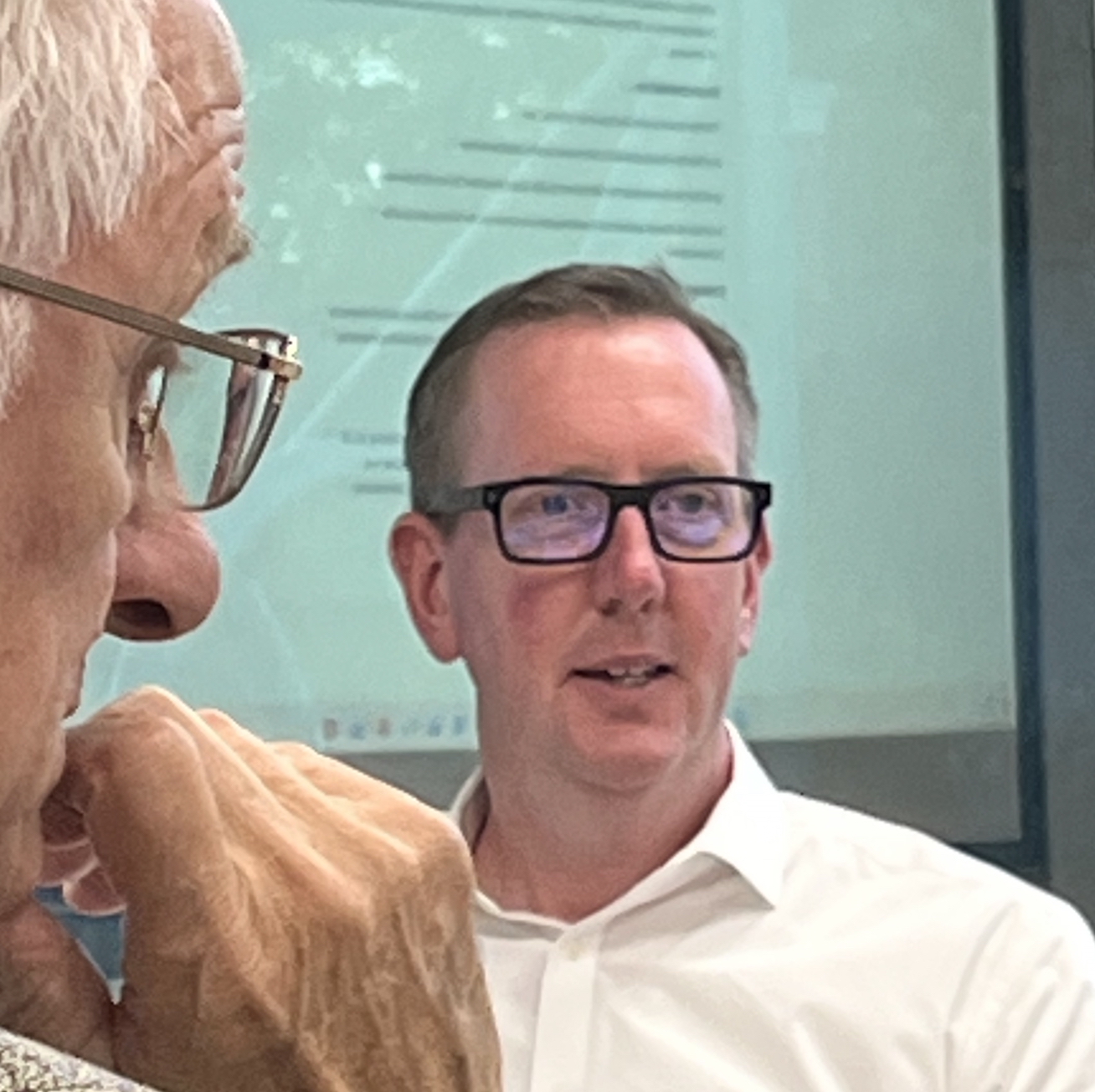
The Board was hardly bubbling with enthusiasm last night when it spent a few minutes considering the issue before moving on to next business.
On 4 August 2026 the Library went out to the market, requesting a quote from consultants to draw up its next Strategic Plan covering the period 2026-2031.
The project objectives said nothing specifically about a second branch or satellite.
New Branch a "strategic plan objective"
On 30 September 2026 the Library Board
“Endorsed Lennova Consultants for strategic planning”.
And in a presentation that was circulated at last night’s meeting I learned that the fourth strategic plan objective (out of six) is to:
“Test the second location opportunity.”
The Board member leading the strategic planning exercise, Neila Poscente, said in as many words that with a new council being elected it was right the Board should look at the second location issue. This caught some Board members off guard.
The cost of a second location cropped up. But if Mulock Farm was financed in an innovative way, then why couldn’t they look at the library in the same way. The group-think was palpable.
Seems to me the last thing the library board wants is a second location. The most unenthusiastic of the lot is the Chair, Darryl Gray, closely followed by the Chief Executive, Tracy Munusami, who always gives me the impression of being programmed to do his bidding.
I shake my head.
The Board will consider Kelly Brome’s proposal to stream Library Board meetings at its next meeting on 16 November 2026.
(Photo right: Victor Woodhouse and Board Chair, Darryl Gray)
Update on 22 October 2026 from Newmarket Today: Board may consider if a second library branch is needed
The exchange on the second branch
Victor Woodhouse: Quite frankly, I was happy to get it (the library) open on Monday. That took a long time, right? So, a second location is going to be, again, as pointed out, if the council of the day should say, this is important, and we're prepared… 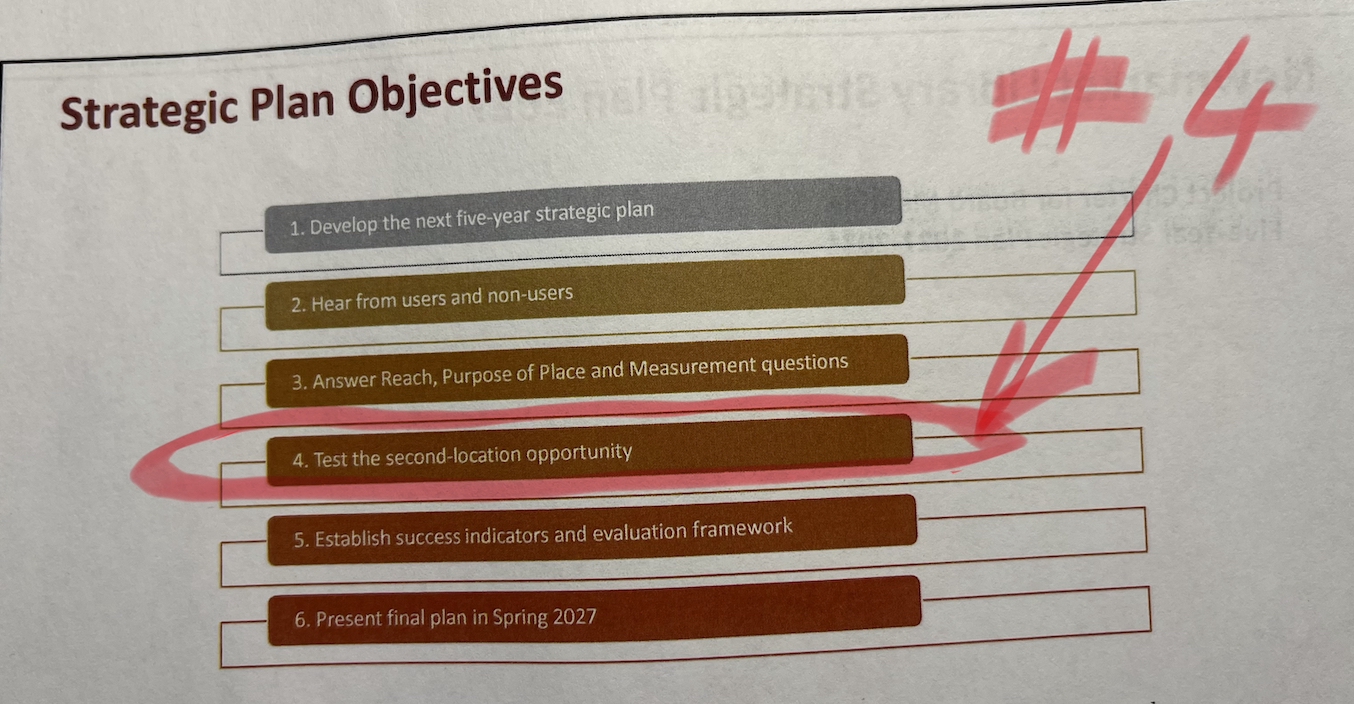
Neila Poscente: And you can do anything with money, right?
Beth Stevenson: And we’re still working on the book mobile as well, too, which gives us outreach and still gives us (indistinct).
Rex Taylor: A second location can mean a number of things.
Neila Poscente: And that's where they (Lennova?) homed in that and said, yeah, it was more than a pop-up shop.
Beth Stevenson: Like it has to be something that ongoing, that the community has…
Neila Poscente: Reliability…
Beth Stevenson: Yeah, exactly, yeah.
Rex Taylor: But it doesn’t have to be a ten storey building.
Beth Stevenson: That would be a second, yeah. Yeah, I think we should have a branch first… the location.
CEO Tracy Munusami: And that is sort of testing that question, right? So, there's been a lot of talk about it, but what is it that we're missing here that would require us to have a 2nd location and just gather in that data to mean so that, um, evidence-based decision around that.
Rex Taylor: Evidence based. Evidence based.
Chair, Darryl Gray: That’s just what I was going to say. It's a big decision. It’s ultimately up to us to make the decision based on something not what we hear in social media or the media.
Neila Poscente: Right. And we need to know how we are going to pay for it….
CHECK AGAINST DELIVERY
- Details
- Written by: Gordon Prentice
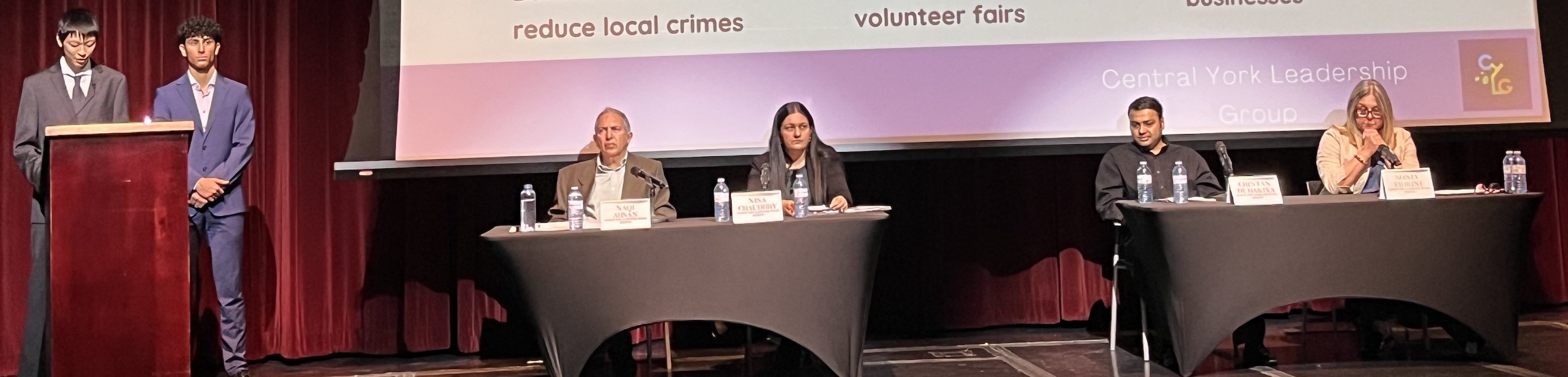 A hearty round of applause for the young people who organised last night’s Ward 1 candidates’ debate – the only one in Newmarket in this year’s election.
The Central York Leadership Group got off the ground in 2018 and describes itself as a group of driven youth leaders, 13-18 years old, dedicated to creating new opportunities in our community. They believe in civic duty.
They were the true stars of the show. Confident and self-assured.
Stale and Moribund
Their enthusiasm brings a breath of fresh air to a stale, palsied and moribund electoral process that can only persuade a quarter of us to vote. Turnout has been declining for years: 36.8% in 2014; 34.7% in 2018 and 24.8% in 2022.
Seeing the candidates in the flesh makes a difference. We see if they can think on their feet. If they have new interesting ideas. If they can engage the audience. Four of the five candidates showed up: Naqi Ahsan; Chintan Dudakiya; Sonia Fiorini; Nisa Chaudry. The fifth candidate, Nasim Bahari, didn't turn up.
The Mayor, acclaimed for the second election in a row, thanked the candidates but reserved his special thanks for the “absolutely incredible” young people.
“The biggest thank you, of course, goes to the Central York Leadership Group. This is amazing. Young kids here, putting together a debate. Debates are so important. The Democratic process is so important, and it doesn't seem to be always happening anymore. And to see them step up and say:
“We're gonna take a leadership role here, and we're going to host a debate for Ward I”
I think, is absolutely fantastic, and shoot the biggest round of applause for the night.”
The Mayor is on record saying he believes in election debates. So why doesn’t he do something about it? 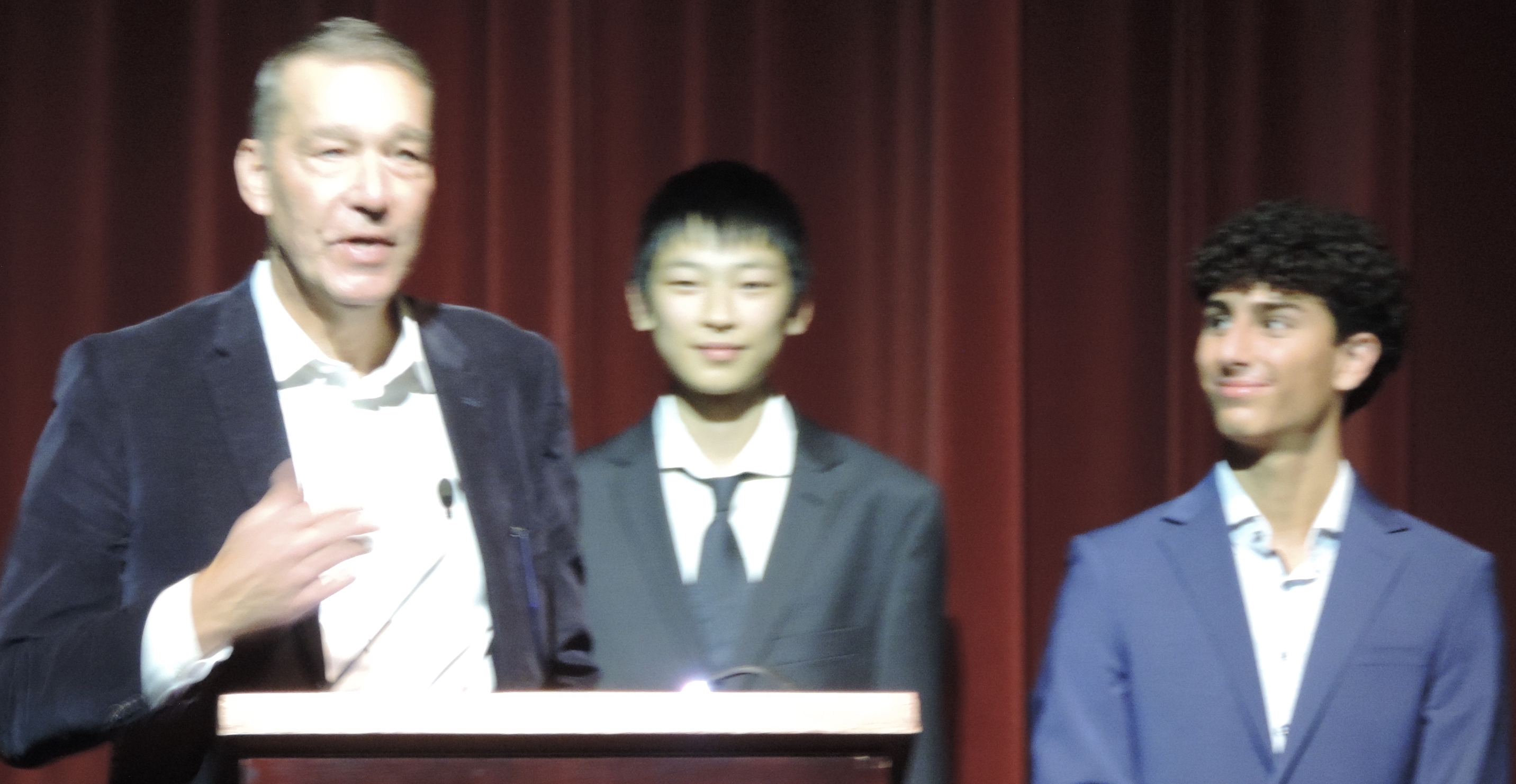
Let the Town host debates
He has a platform. He has enormous influence. He is at the peak of his powers. Instead of wringing his hands about our faltering “democratic process” why doesn’t the Town appoint an independent, arms-length Debates Organiser? And if it doesn’t have the legal powers to do this then why not lobby the Province for a change in the Municipal Act to allow this?
Alternatively, he could always ask the 13-18 year olds to organise further debates in the next round of elections – the Provincial and the Federal. I am pretty sure the teenagers would step up to the plate if asked. Our current MPP, Dawn Gallagher Murphy, and our MP, Sandra Cobena, who avoid election debates like the plague, might be persuaded to turn up if the invitation came from a group of 13-18 year olds.
For me, last night was a humbling experience. Most of the people who organised the debate are too young to vote.
Click “Read More” below for the Mayor’s remarks.
Read more: Newmarket's only Candidates' Debate Organised by People too Young to Vote
- Details
- Written by: Gordon Prentice
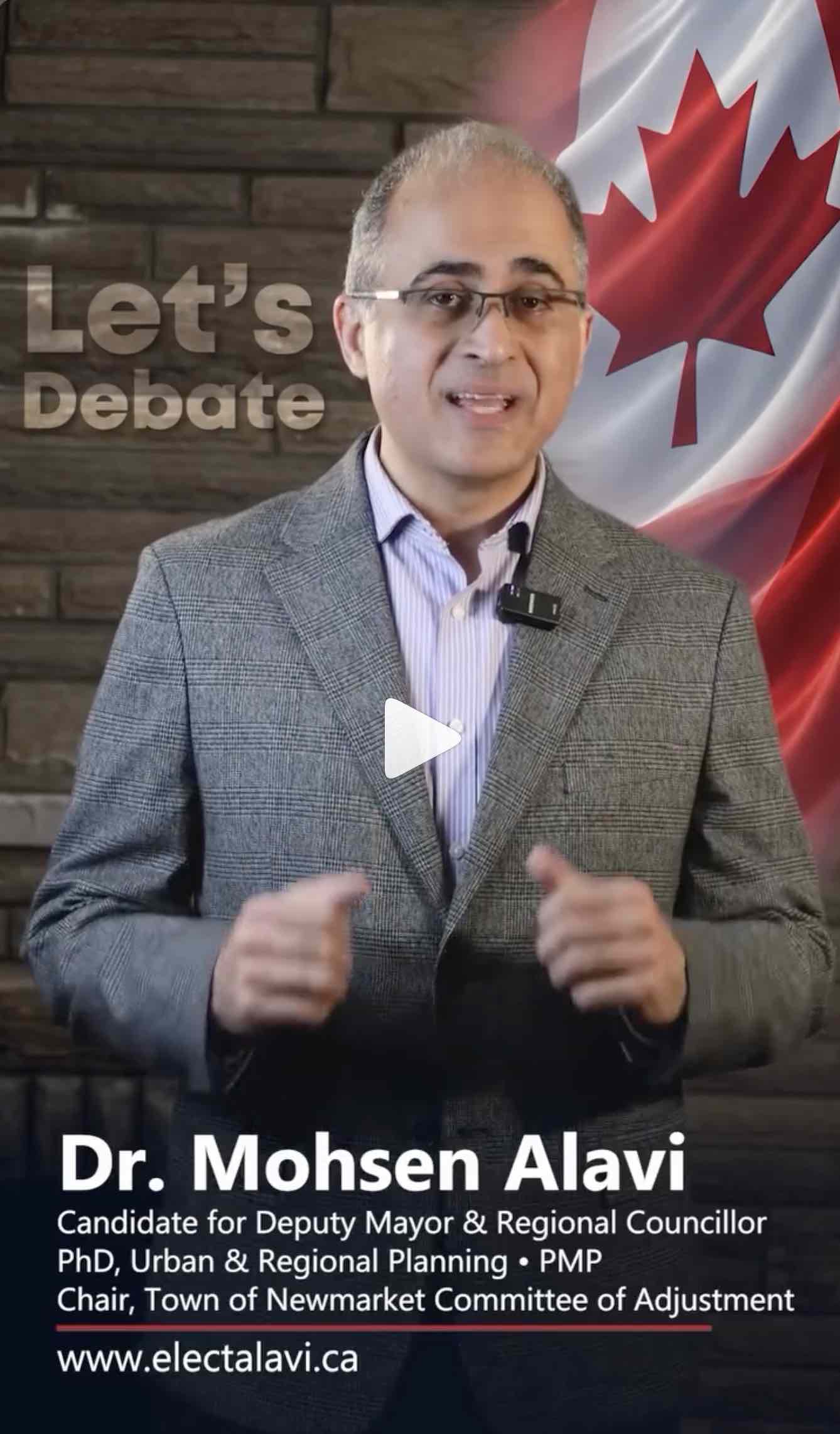 I see that Dr Mohsen Alavi has invited Tom "Instagram" Vegh to participate in an election debate - in person or on-line
Personally, I can't see that happening.
I recently asked Vegh to join me in a conversation at Newmarket Public Library about his plans for a new branch or satellite library but he said he couldn't fit me in to his busy schedule. He claimed he was fully booked until voting ends.
Sure. What's new?
Maybe Vegh will clear his diary and make space for a debate but I wouldn't bet on it.
Vegh has a record that, if widely known, would torpedo his chances of a third term on the public payroll.
Disgracefully, he took barrow loads of money from developers to get elected in 2018.
He promised a new library and seniors' centre but didn't deliver. He casually abandoned his promise three months after the 2018 election telling fellow councillors that if the Library Board wanted a new library then they should make it a priority. It wasn't up to him.
Not a single Motion in eight years
In his eight years on York Regional Council he has not authored a single motion brought forward for debate.
Vegh invents an attendance record at Town and York Region meetings which is miles away from the truth.
He says he actively participates in the work of both councils when his default position is to say next to nothing.
Vegh has found his niche taking photos of people and events and posting them on Instagram. He breathlessly tells his viewers what's happening in Newmarket in the week ahead.
You don't need to pay someone $168,000+ a year to do that.
Disqualifying
Vegh is over-promoted, under-performing and over-paid with a record that would be disqualifying if put under the spotlight.
That's why Vegh won't debate.
Mohsen Alavi responds to this conundrum gently:
"I am inviting my fellow candidate Tom Vegh to a public debate.
Hello Newmarket.
Because of your many requests, I accept any debate.
A respectful, moderated discussion in person or online, as soon as possible. And, ideally, before the voting begins. Where you can ask both of us anything about plans, commitments, promises and campaigns.
The Deputy Mayor represents every resident at both the Town and York Region.
You deserve to hear from us directly.
We love Newmarket.
We respect your vote.
And your questions deserve to be answered."
If Vegh accepts I'll eat my hat.