Monday 19 October 2026 is referendum day in Alberta. 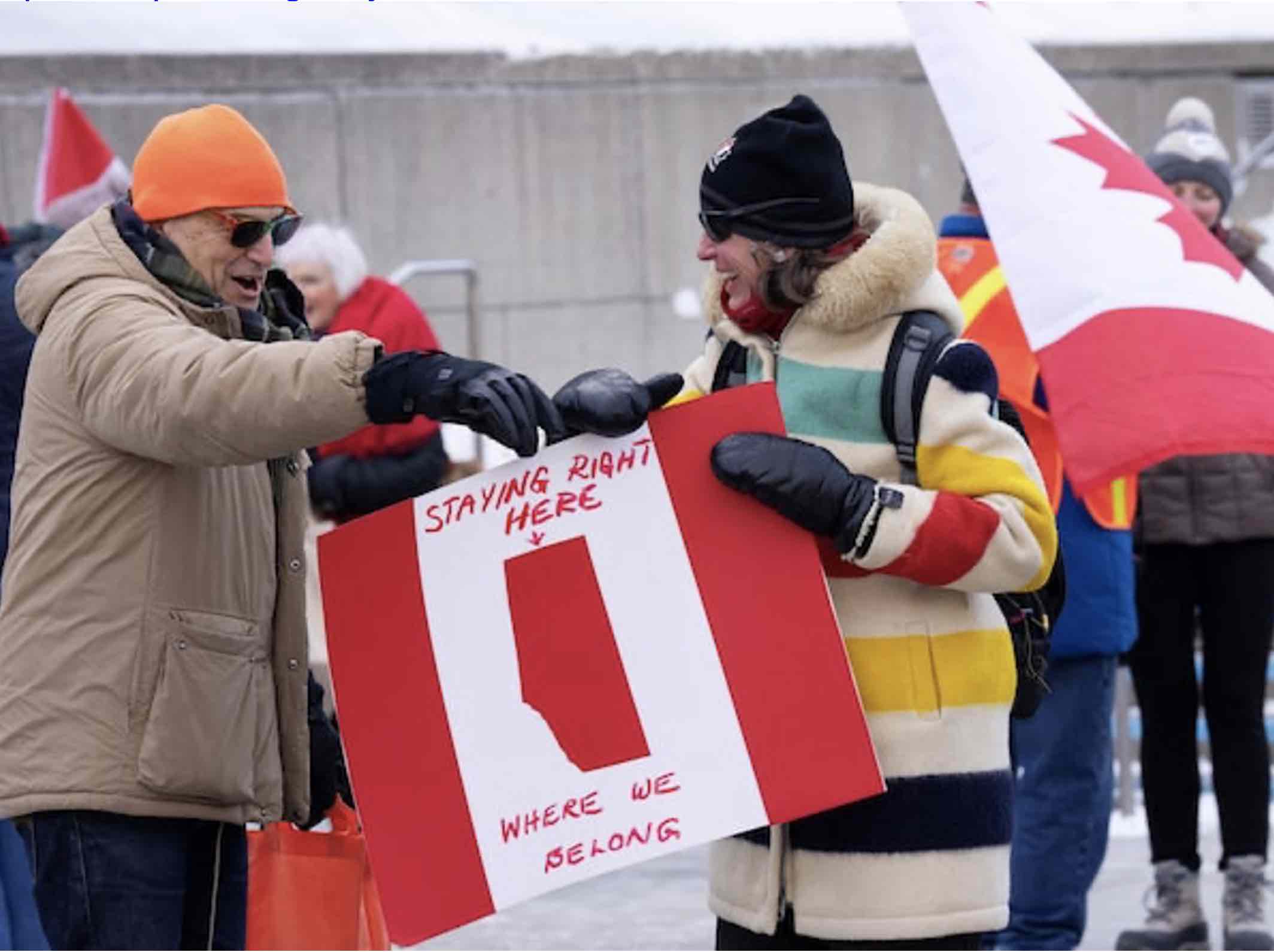
For one moment, just imagine yourself to be a voter in Alberta.
You want to be informed. You want to do the right thing.
You are asked to decide on the following questions, marking “x” next to the options of your choice on the ballot paper. The referendum is non-binding.
Brow furrowed. Pencil poised.
Should Alberta remain a province of Canada, or should the Government of Alberta commence the legal process required under the Canadian Constitution to hold a binding provincial referendum on whether or not Alberta should separate from Canada?
Option 1: Alberta should remain a province of Canada.
Option 2: The Government of Alberta should commence the legal process required under the Canadian Constitution to hold a binding provincial referendum on whether or not Alberta should separate from Canada
Do you support the Government of Alberta taking increased control over immigration for the purposes of decreasing immigration to more sustainable levels, prioritizing economic migration and giving Albertans first priority on new employment opportunities?
Do you support the Government of Alberta introducing a law mandating that only Canadian citizens, permanent residents and individuals with an Alberta approved immigration status will be eligible for provincially-funded programs, such as health care, education and other social services?
Assuming that all Canadian citizens and permanent residents continue to qualify for social support programs as they do now, do you support the Government of Alberta introducing a law requiring all individuals with a non-permanent legal immigration status to reside in Alberta for at least 12 months before qualifying for any provincially-funded social support programs?
Assuming that all Canadian citizens and permanent residents continue to qualify for public health care and education as they do now, do you support the Government of Alberta charging a reasonable fee or premium to individuals with a non-permanent immigration status living in Alberta for their and their family’s use of the healthcare and education systems?
Do you support the Government of Alberta introducing a law requiring individuals to provide proof of citizenship, such as a passport, birth certificate or citizenship card, to vote in an Alberta provincial election?
Do you support the Government of Alberta working with the governments of other willing provinces to amend the Canadian Constitution to have provincial governments, and not the federal government, select the justices appointed to provincial King’s Bench and Appeal courts?
Do you support the Government of Alberta working with the governments of other willing provinces to amend the Canadian Constitution to abolish the unelected federal Senate?
Do you support the Government of Alberta working with the governments of other willing provinces to amend the Canadian Constitution to allow provinces to opt out of federal programs that intrude on provincial jurisdiction such as health care, education, and social services, without a province losing any of the associated federal funding for use in its social programs?
Do you support the Government of Alberta working with the governments of other willing provinces to amend the Canadian Constitution to better protect provincial rights from federal interference by giving a province’s laws dealing with provincial or shared areas of constitutional jurisdiction priority over federal laws when the province’s laws and federal laws conflict?
That's quite a fistful of questions.
And to help voters make their minds up we have a bunch of organisations offering advice. Elections Alberta doesn't provide any information on the issues themselves. Voters may choose to rely on information from the Government of Alberta, the separatists, the Federalists and sundry others. And here is a snapshot on Alberta separatism from wikipedia.
So where do I stand?
On the main question I tend to agree with Professor Kent McNeil at York University's Osgoode Law School who wrote in the Globe and Mail on 23 February 2026:
"Some Albertans seem to think that separation from Canada can be achieved by a majority vote in a provincial referendum. It’s not that simple."
"The minority of Albertans who appear to think they can just walk away and take all this with them are deluding themselves. They have no unilateral right to do so under the Canadian Constitution or international law. Nor could they do so without the consent of the Indigenous peoples in Alberta."
(Click "Read more" to read the Globe and Mail piece.)
Professor McNeil's argument is developed in much greater detail here: Alberta’s Creation: A Historical and Legal Analysis:
"Unlike the four original Canadian provinces or the provinces, such as British Columbia, that joined later, Manitoba, Saskatchewan and Alberta were carved out of the North-West Territories that were already part of Canada. At the time of their creation, it would have been unthinkable that any one of the Prairie Provinces would have had the right to separate from Canada. Likewise, when Canada transferred public lands and resources to the Prairie Provinces in 1930, it would have been on the clear understanding that they would remain in Canada and contribute to the national economy. Alberta cannot simply walk away and take all this with her.
Moreover, Canada and Alberta both owe constitutional obligations to the Indigenous peoples of the province, including obligations to respect and protect First Nation treaty rights. If Alberta were to become independent, the treaty territories of most of the First Nations in Alberta would be severed by international borders, restricting access to constitutional hunting and fishing rights. First Nations would also lose the rights they now have under the UN Declaration on the Rights of Indigenous Peoples because Alberta has not adopted the Declaration and would be under no obligation to do so.
A unilateral declaration of independence by Alberta would be illegal. In the Secession Reference, the Supreme Court decided that the Constitution of Canada does not permit provinces to secede. The Court found as well that Quebecers do not have a right to self-determination that would allow them to leave Canada without a negotiated agreement grounded in Canada’s foundational constitutional principles of “federalism, democracy, constitutionalism and the rule of law, and respect for minority rights”, despite the fact that Quebec is a distinct society with its own culture and language. Respect for minority rights includes the rights of the Indigenous peoples of Canada. If Quebec does not have a legal right to secede from Canada, a fortiori Alberta does not either."
The UK's recent experience of referendums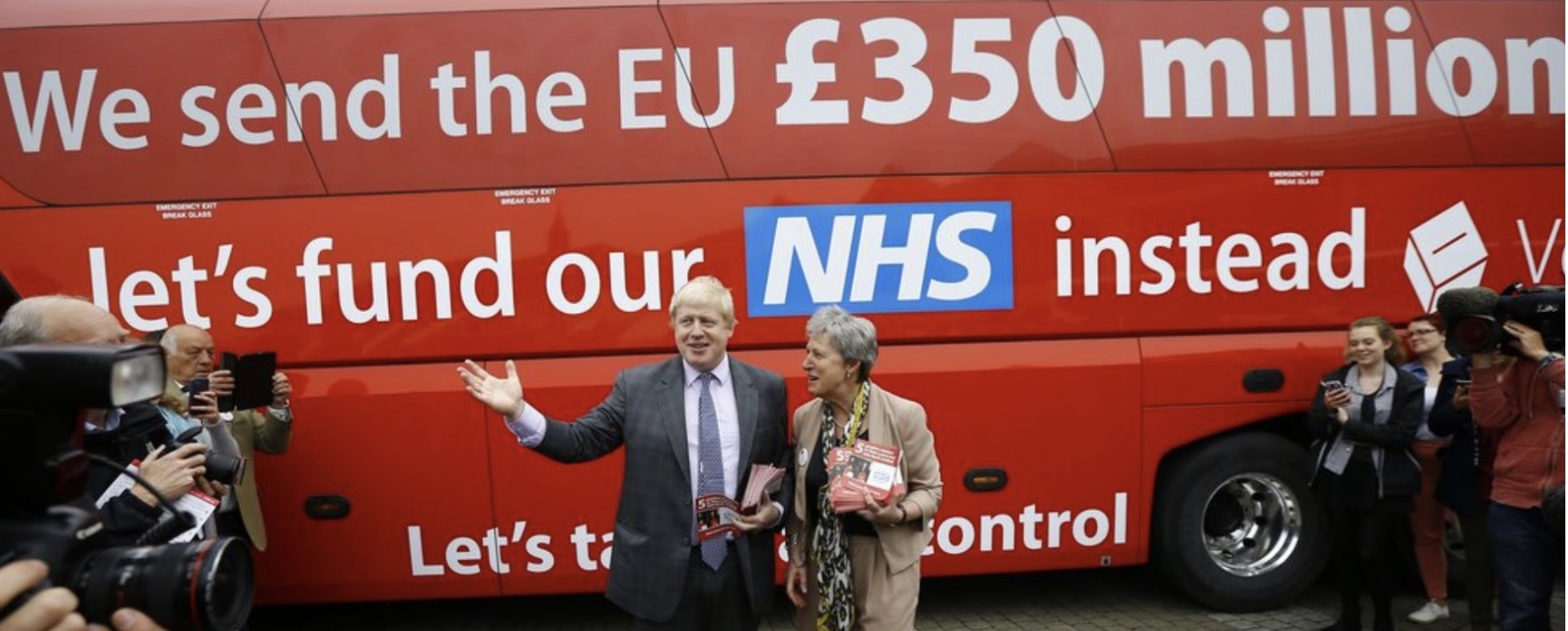
The Brexit Referendum shows how easily things can go off the rails when the voters are not given detailed information on the alleged benefits and drawbacks of the proposition put before them.
People were told they - and the country - would be better off outside Europe. Indeed, Boris Johnson promised £350M a week for the National Health Service as a direct result of leaving the EU. This figure was plucked out of thin air but never challenged by the nation's most trusted source of news, the BBC. It sat on the fence, terrified of being accused of bias.
When he was Governor of the Bank of England Mark Carney had a front row seat in the Brexit drama.
He warned that leaving without a deal would shrink the UK economy by about 8% in the first year. In the event, a deal was struck but it turned out to be truly disastrous. The economy is now about 6%-8% smaller than it would have been if the UK had remained in the EU.
Scottish Independence
A referendum on Scottish independence was held on 18 September 2014. The "No" side won 55.3% of the vote and the "Yes" side 44.7% on an 84.6% turnout.
Unlike Alberta, Scotland was once an independent country in its own right. The Union of the Crowns 1603 was followed by the Union of the Parliaments in 1707 to create a new state called Great Britain.
But even if a future referendum on Scottish independence were successful, the job of unravelling the UK state after 300+ years would be an administrative nightmare quite beyond parallel.
Alberta is part of Canada and must remain so.
This email address is being protected from spambots. You need JavaScript enabled to view it.
See also: The Globe and Mail's Andrew Coyne: Canada is a historically successful country. Now malcontents are trying to destroy it.
KENT MCNEIL
SPECIAL TO THE GLOBE AND MAIL
PUBLISHED FEBRUARY 23, 2026
Kent McNeil is Emeritus Distinguished Research Professor at York University’s Osgoode Hall Law School.
Some Albertans seem to think that separation from Canada can be achieved by a majority vote in a provincial referendum. It’s not that simple.
Canada was created in 1867 when three British colonies united and became the provinces of New Brunswick, Nova Scotia, Ontario and Quebec. They each consented to enter into Confederation, as did British Columbia, Prince Edward Island and Newfoundland, which joined later. Manitoba, Saskatchewan and Alberta, on the other hand, didn’t enter Canada. Acts of the Canadian Parliament carved them out of Rupert’s Land and the North-Western Territory, which were transferred from Britain to Canada in 1870.
After the transfer, in preparation for the settlement of the Prairies, Canada then entered into treaties with the First Nations. In what became Alberta, the first of these treaties was signed in 1874, and the last in 1899. With the exception of Treaty 7 with the Blackfoot Confederacy, they also include territory in what was to become Saskatchewan in 1905 and, in the case of Treaty 8 in 1899, extend into British Columbia and the Northwest Territories.
Opinion: Saskatchewan shows Alberta how to handle a separatist threat seeking U.S. support
In these treaties, Canada – not the province of Alberta, which did not exist until 1905 – made promises to the First Nations, including promises to respect their ways of life for as long as the sun shines and rivers flow. Since 1982, Canada’s obligations under these treaties have been recognized and affirmed by the Canadian Constitution.
Were Canada to accept Alberta’s separation, it would be reneging on these solemn promises and breaching its own Constitution. It would be accepting the division of treaty territories that cross provincial boundaries. It would be abandoning the First Nations of Alberta to the whims of a new national government, whose relations with First Nations as a provincial government have not always been positive.
Surely, the secession of Alberta would require Indigenous consent. The UN Declaration on the Rights of Indigenous Peoples (UNDRIP) requires their “free, prior and informed consent” to measures that affect their rights. The federal government has endorsed this Declaration and Parliament has committed Canada to implementing it. British Columbia has done likewise. Alberta has not.
UNDRIP also provides that the Indigenous peoples have the right to self-determination. Albertans, as a group, do not because they are not a “people” by international law standards – they are residents of a Canadian province with a population that fluctuates as citizens and permanent residents exercise their Charter right to move in and out of the province. (This is another right that would be lost were Alberta to secede, which is just one of many reasons why Canadians more generally should have a voice in the matter.)
Amid a wave of Canada-wide unity, Alberta separatists push back
From 1870 until 1905, when Alberta and Saskatchewan were created, the territory they would be carved from was administered by Ottawa, with limited authority delegated to a legislative assembly in 1888. Desiring more local autonomy, the assembly passed a resolution in 1900 calling on Sir Wilfrid Laurier’s Liberal government to grant provincial status. Frederick Haultain, the territorial premier, favoured one big province, but Laurier opted for two provinces, which is how Alberta and Saskatchewan came into being. The boundary between them was arbitrarily drawn at 110 degrees west longitudebecause Laurier wanted them to be about equal in size. The geographical extent of these provinces bore scant resemblance to the smaller, pre-existing territorial districts of Alberta and Saskatchewan.
All of the provinces that united to form Canada or later joined it retained their public lands, with certain exceptions, such as military lands, harbours and railways. When Alberta and Saskatchewan were created out of the federally owned North-West Territories, the federal government retained these lands, as it did when Manitoba was created in 1870. Laurier justified this on the basis that the other provinces owned these lands previously, whereas the Prairie provinces did not, reflecting the nature of their founding. Ottawa did relent in 1930, however, correcting this inequality through the Natural Resources Transfer Agreements, which transferred public lands and resources from the federal government to the Prairie provinces. These rich natural resources – effectively a gift from Ottawa – came with the obvious understanding that the Prairie provinces would remain part of this country.
The minority of Albertans who appear to think they can just walk away and take all this with them are deluding themselves. They have no unilateral right to do so under the Canadian Constitution or international law. Nor could they do so without the consent of the Indigenous peoples in Alberta. This divisive dream needs to be abandoned, so we can concentrate on the real threat to this country from the south.
